

CASA ITALIA, LONDON
when
2026
where
London
UniFor takes part in the Casa Italia project in London, the new headquarters of the Italian institutions in the United Kingdom, contributing to the furnishing of workspaces and consultation areas. The project interprets Italian design as a structural element of efficiency, identity and representation, within an institutional intervention of strong symbolic value.
Casa Italia is the new Italian institutional complex located in Buckingham Gate, just a few steps from Buckingham Palace, and represents the most significant real estate acquisition carried out by the Italian Ministry of Foreign Affairs and International Cooperation in the United Kingdom in recent decades. The project marks a turning point in Italy’s presence in London, proposing a new model for institutional spaces that combines functional efficiency, sustainability and cultural identity.
Housed in a Victorian building of approximately 2,000 square metres, Casa Italia will host, starting in autumn 2025, over 80 staff members from the Italian Embassy, the Italian Cultural Institute and ICE – the Italian Trade Agency. Conceived as a place for work, representation and exchange, the building will be frequented on a daily basis by Italian and international institutional representatives, as well as figures from the cultural, economic and academic worlds, journalists and key stakeholders.
The intervention is conceived as a collective project of Italian design, involving UniFor, Citterio and Molteni & C, alongside other leading Italian companies, in a dialogue between architecture, furnishings and culture that positions design as a contemporary tool of representation and an infrastructure in service of the institutions.
LIBRARY AND WORKSPACES
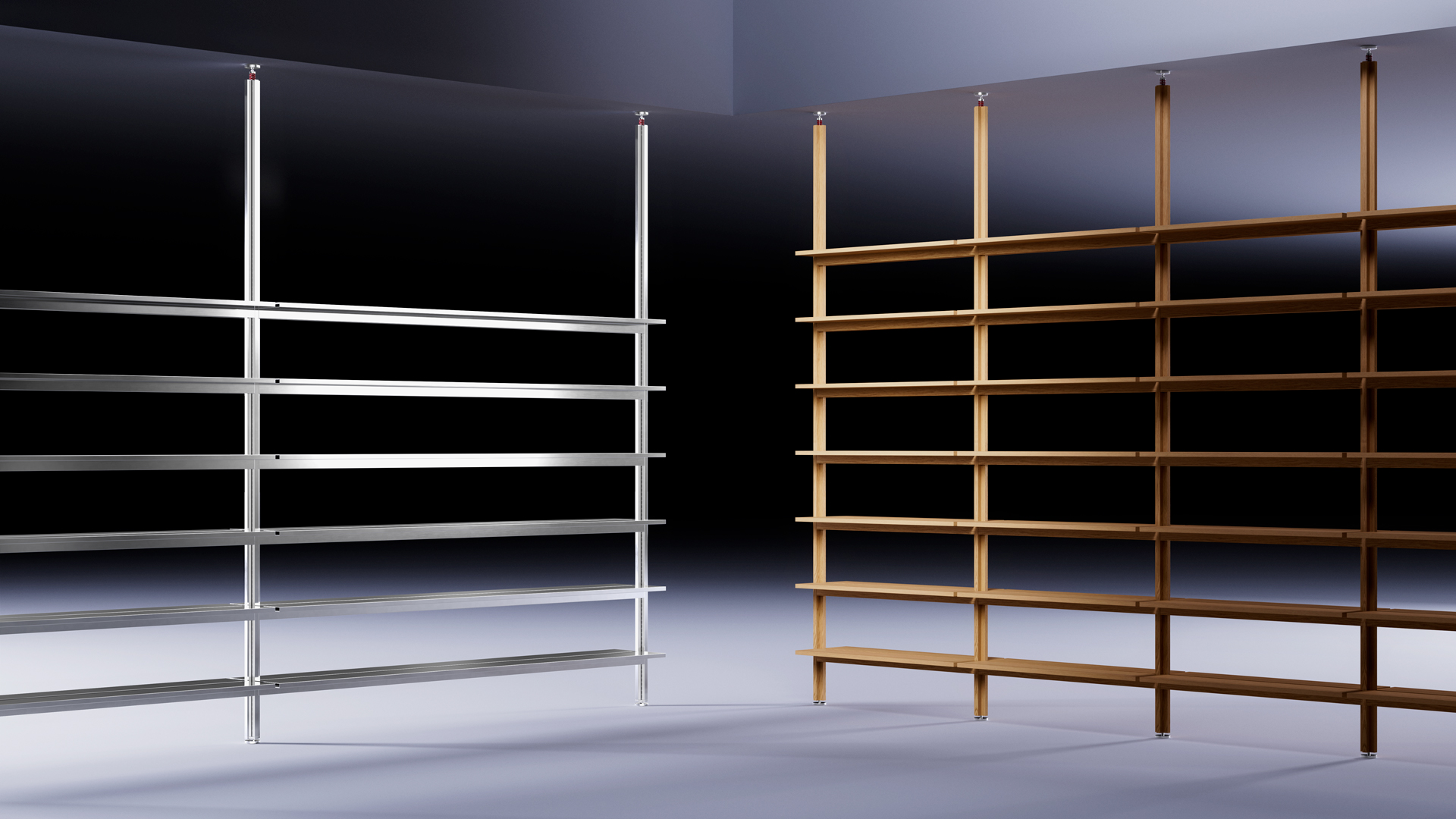
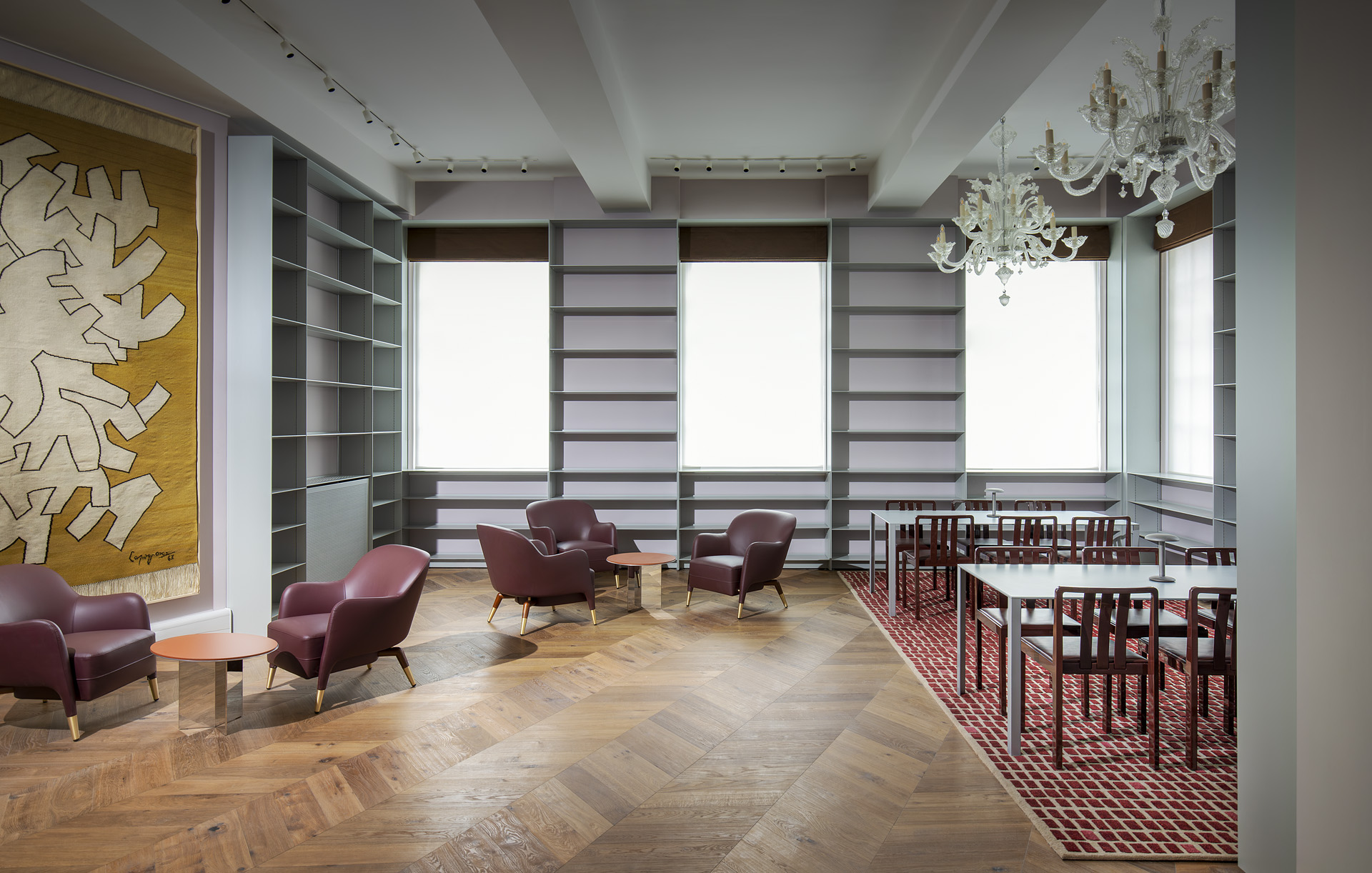
The Library, located on the ground floor of the building, is defined by the presence of the CF single-sided shelving system, designed by Dante Bonuccelli for UniFor.
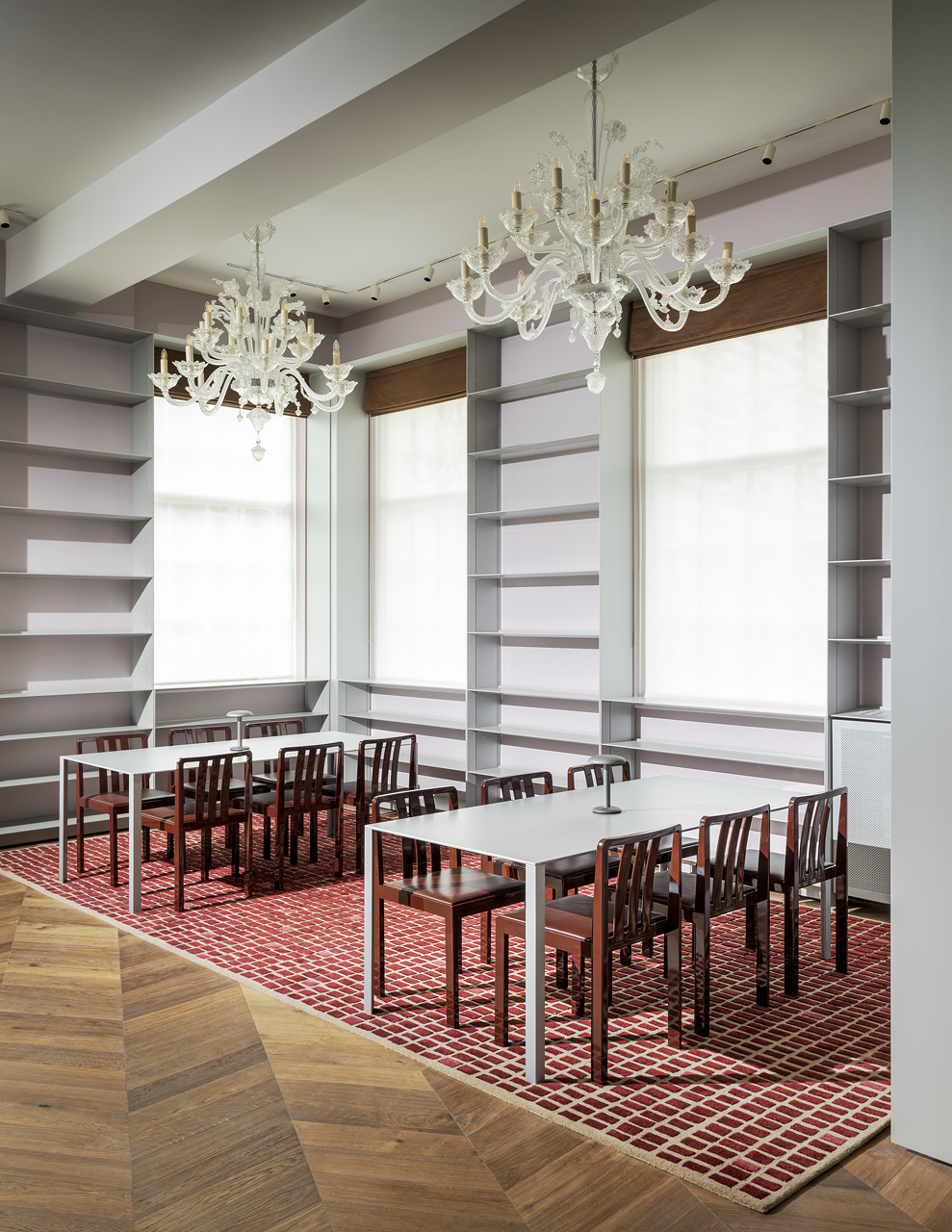
Finished in silver lacquer, the shelving runs along the perimeter walls and extends to full height, engaging in a dialogue with the natural light entering through the large windows and with the artworks displayed. Its modular structure allows it to adapt precisely to the irregular layout of the room, creating a measured visual rhythm that enhances both the verticality of the space and its function as an area for consultation.
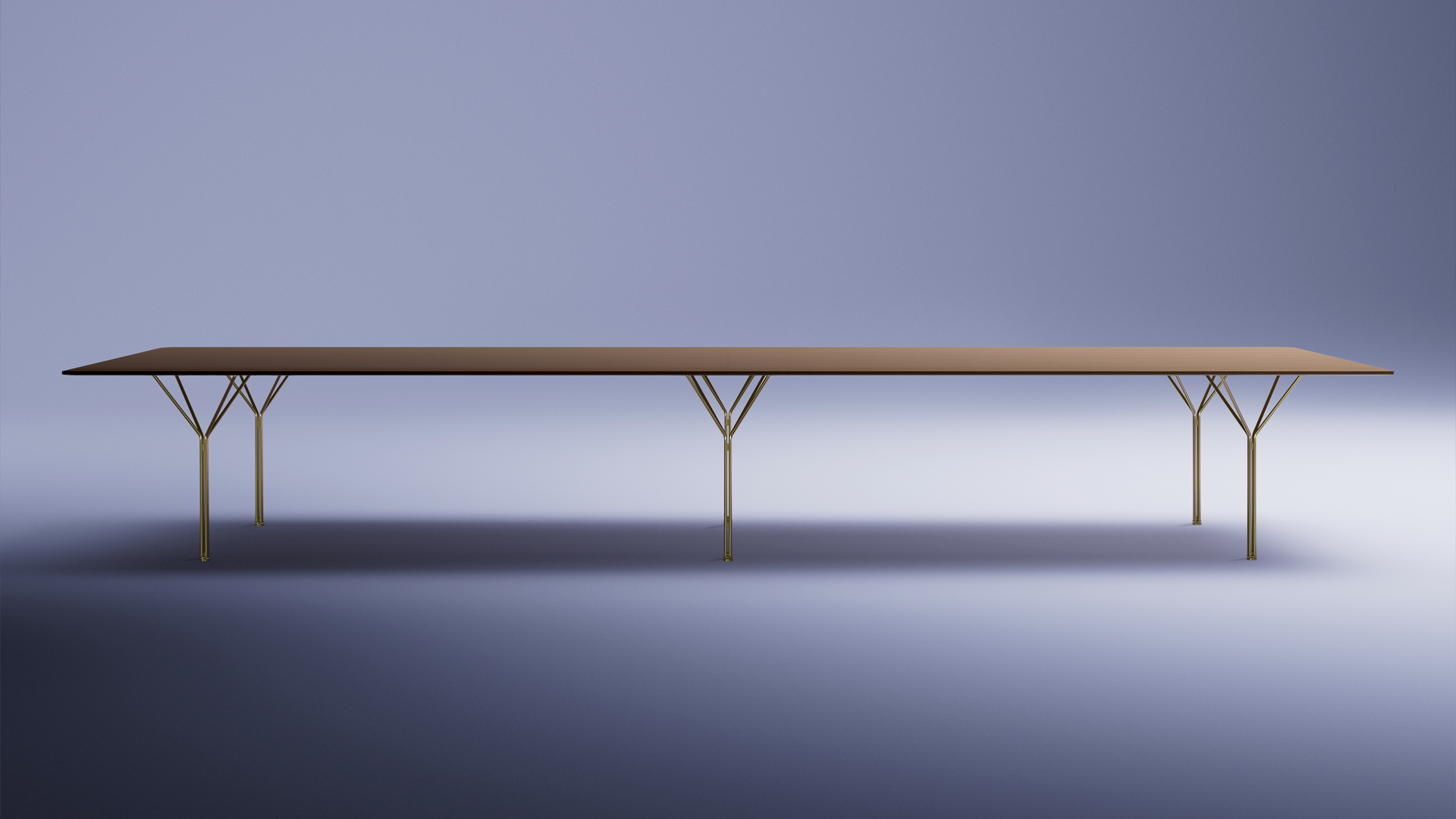
Completing the Library are two Less tables designed by Jean Nouvel, also finished in silver lacquer, conceived as surfaces for study and reading and contributing to an atmosphere of understated contemporary elegance. Alongside the iconic Gio Ponti armchairs, the space is complemented by Andromeda side tables by LSM, featuring a lacquered aluminium structure and concrete-effect tops, selected for their balance between material presence and visual lightness.
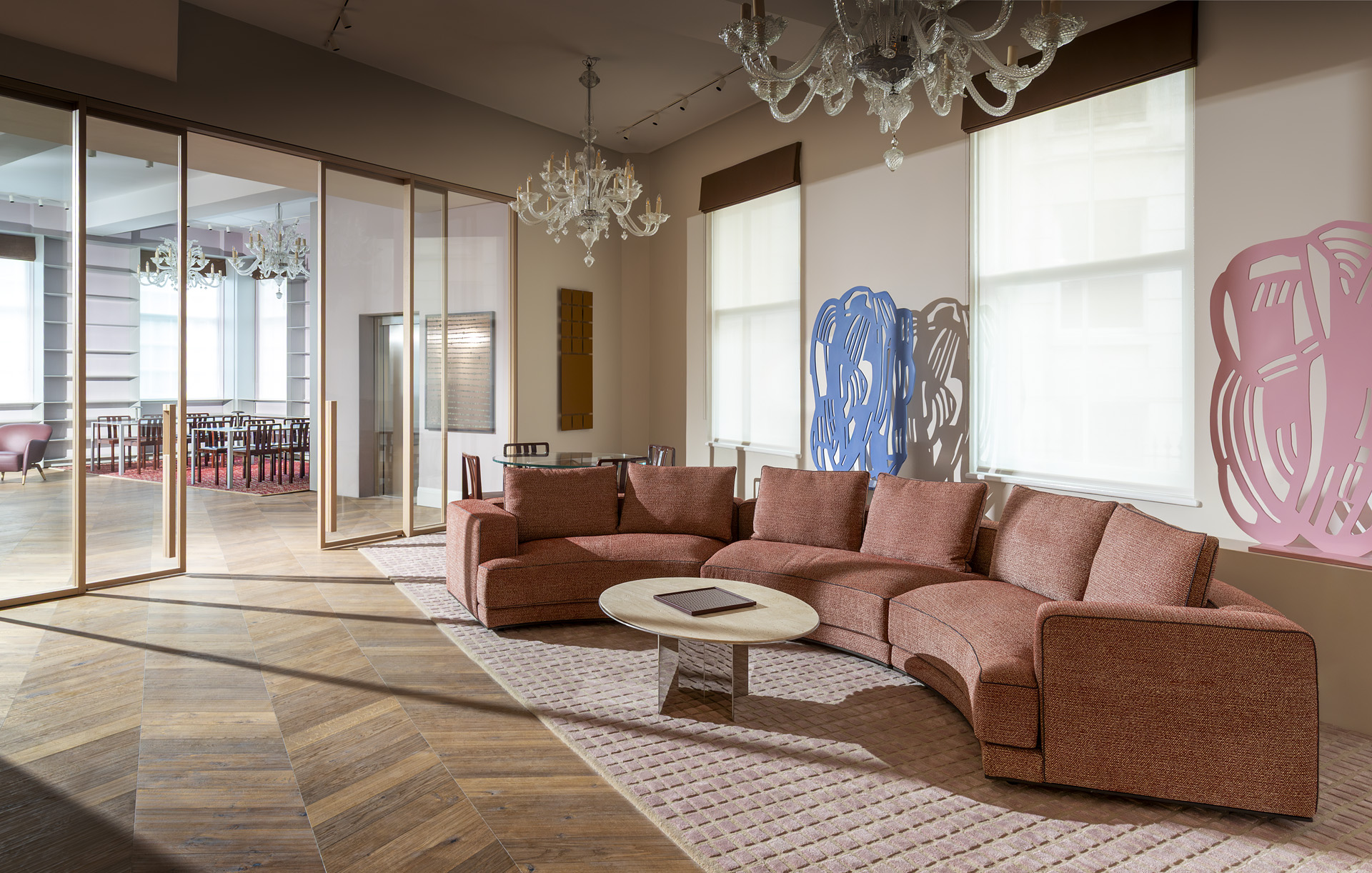
The same collection also defines the area in front of the Library, where an elliptical table with a travertine top introduces a warm, natural note. Separating the Library from the adjacent spaces is the Wood Wall 88 system by Citterio, a glazed partition with double sliding doors that defines the spaces while maintaining transparency, visual continuity and a high level of acoustic comfort. The light finishes and attention to detail highlight the system’s ability to integrate seamlessly into prestigious institutional contexts without compromising functionality.
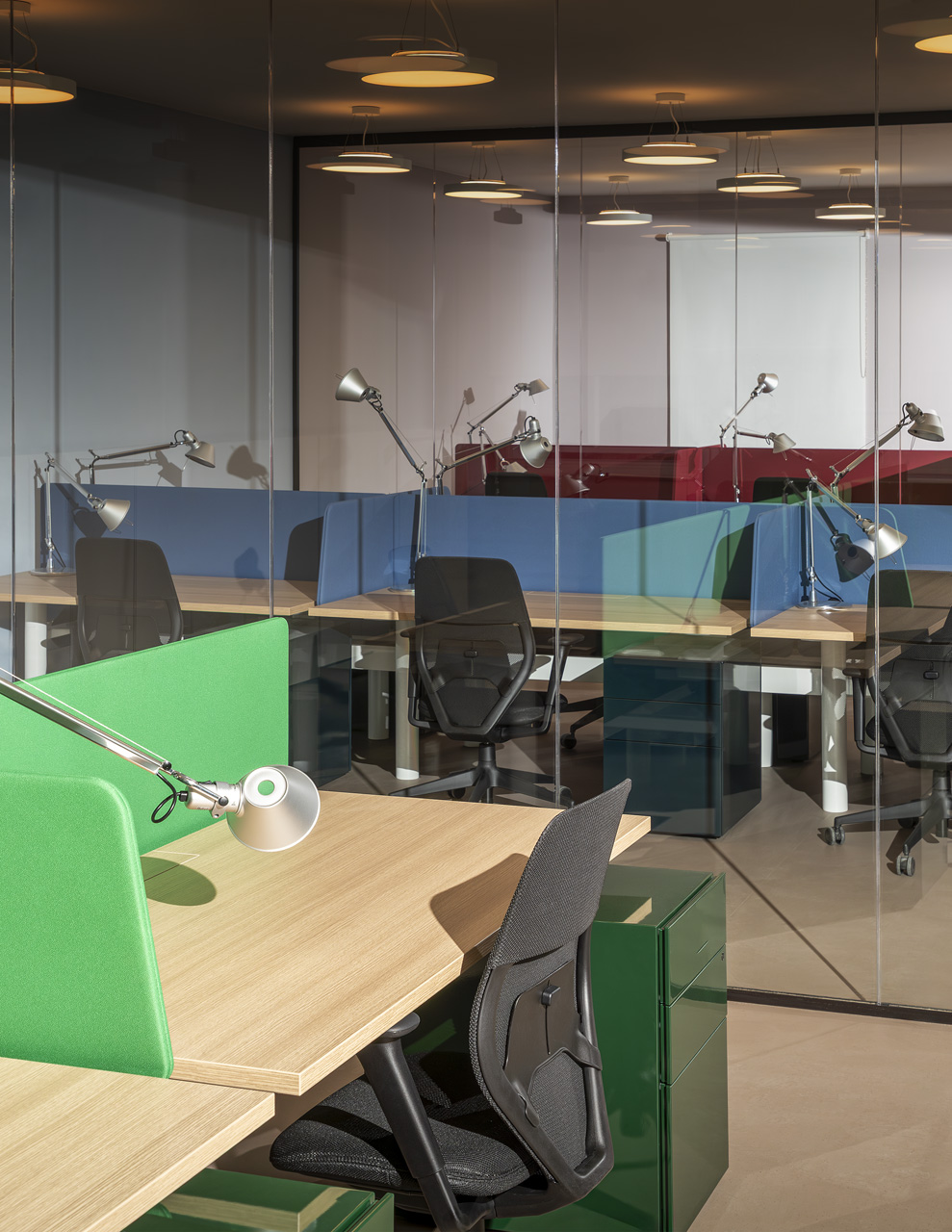
UniFor furnishings are distributed throughout all levels of the Embassy building, contributing to the definition of the work environments through a coherent and recognisable design language.
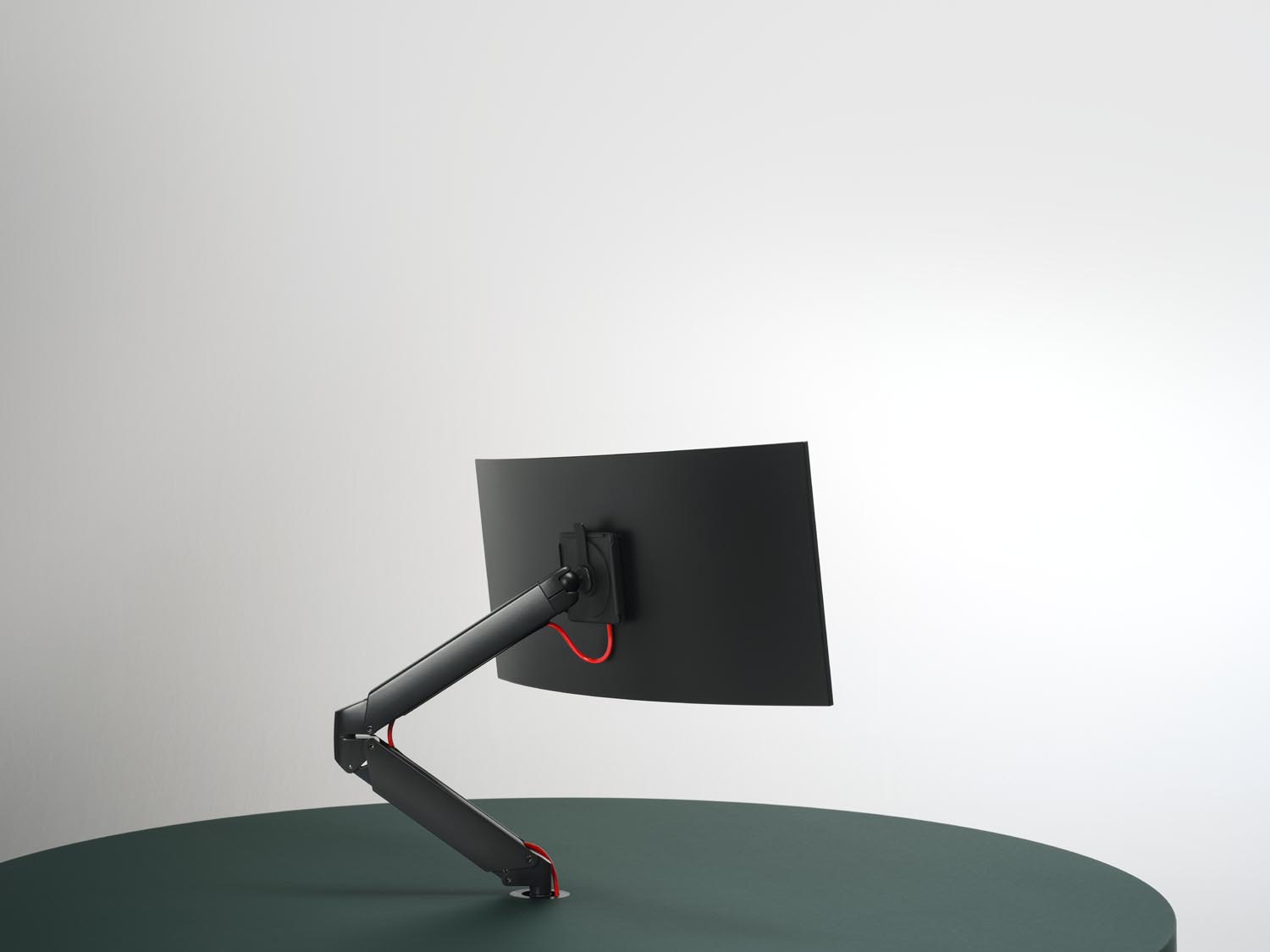
The versatility of the systems made it possible to develop a complex and articulated project, centred around height-adjustable S200 workstations, available in single, double or multiple configurations and installed from the ground floor up to the third floor.
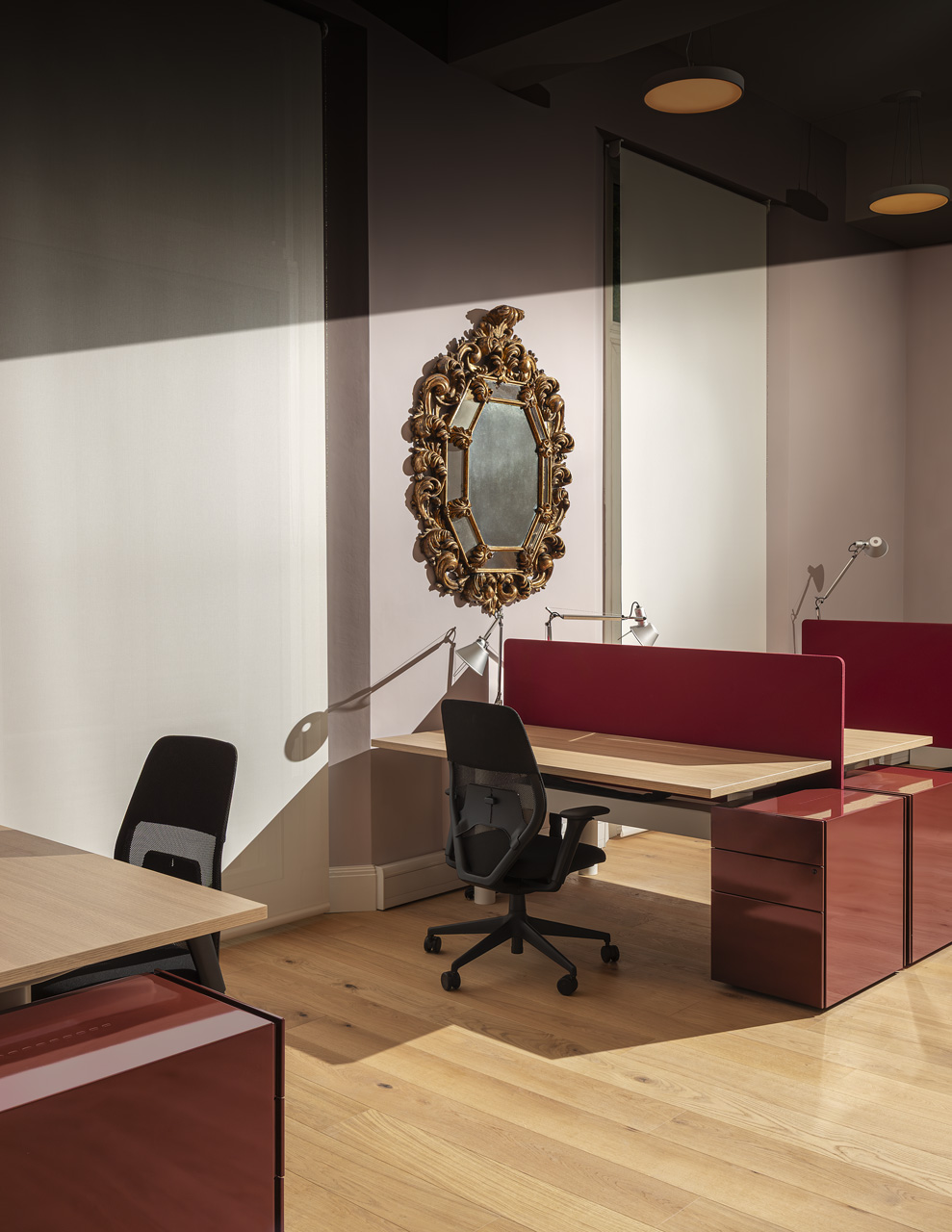
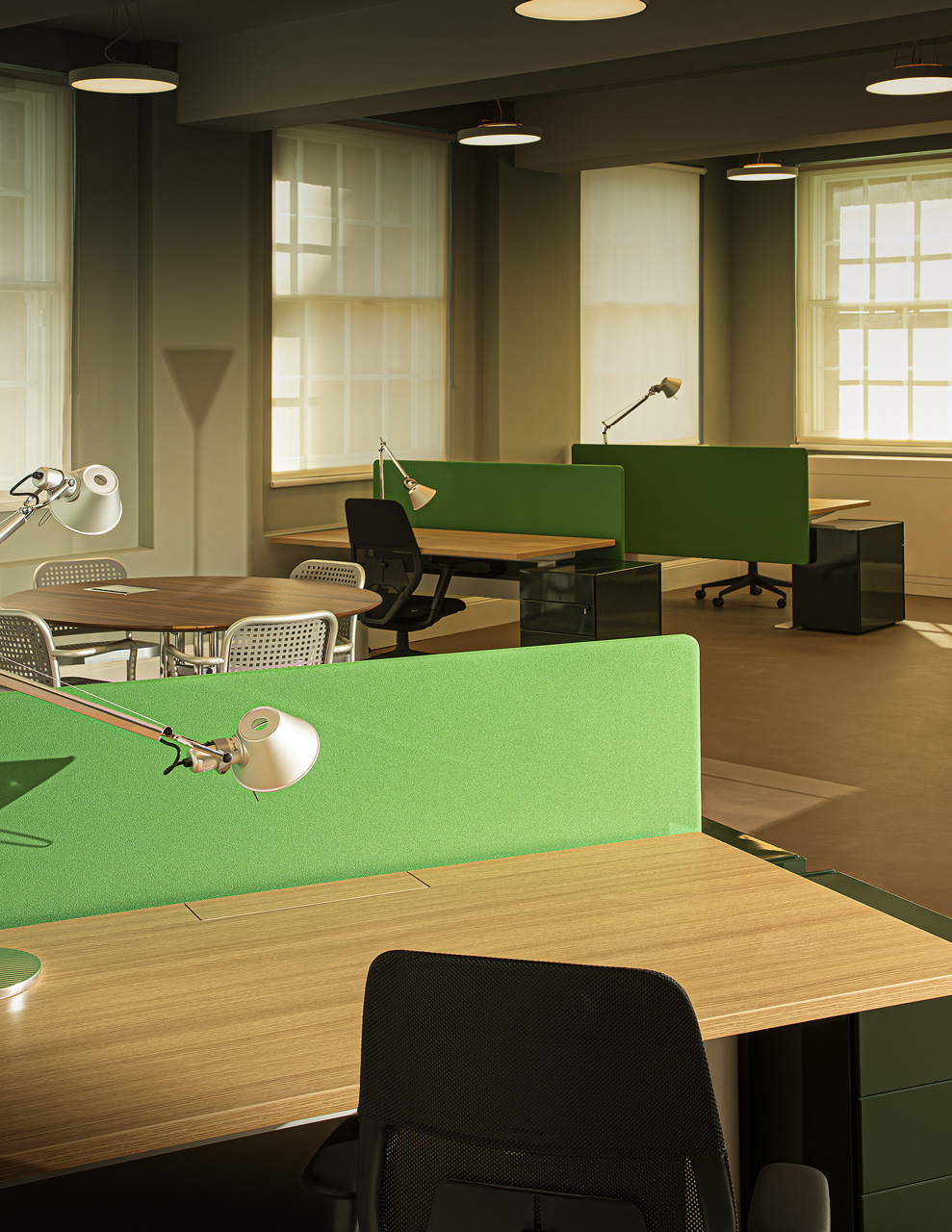
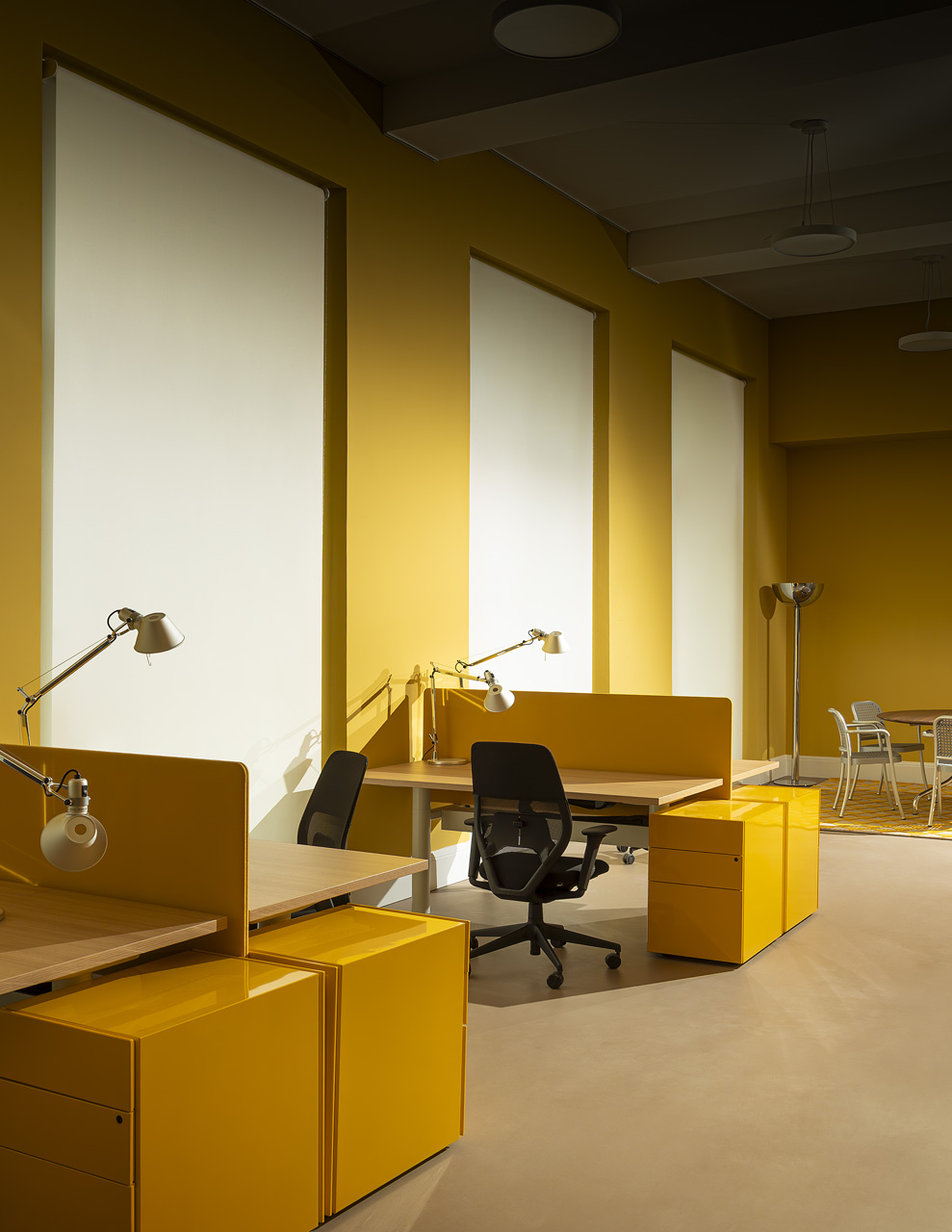
According to the different functions and identities of the areas, the workstations have been customised with a vibrant colour palette: red, blue, green and yellow, introducing elements of orientation and enhancing the spatial quality of the interiors. The furnishing programme is completed by Neutra storage units and MA filing systems, selected for their formal clarity, material robustness and ability to integrate into an architectural project that prioritises order, ease of use and durability.
The overall furnishing scheme, distributed across offices, open-plan areas and support spaces, contributes to the creation of professional yet welcoming environments, through a carefully balanced combination of lacquered metals, material surfaces, glazed transparencies and controlled chromatic accents.