

Fondation Cartier pour l’art contemporain, Paris, France
when
2025
where
Paris
architecture
Jean Nouvel
UniFor contributes to the interiors of the new Fondation Cartier pour l’art contemporain at Place du Palais-Royal, in the heart of Paris, as part of the transformation project designed by Jean Nouvel.
Since its founding in 1984, the Fondation Cartier has fostered dialogue and artistic experimentation, placing the relationship between creation and exhibition at the core of its cultural vision.This perspective has shaped its ongoing dialogue with architect Jean Nouvel, who designed the former building on Boulevard Raspail and now continues his architectural research through the transformation of a historic Haussmannian structure dating back to 1855.
While preserving the original external envelope, the building has been entirely reimagined internally. In the realisation of several key areas, Jean Nouvel relied on a long-standing collaboration with UniFor, reinforcing a partnership rooted in shared experimentation and technical excellence.
The new Fondation Cartier is articulated through a dynamic architectural system composed of five adjustable platforms set at eleven different levels.
This scenographic device, spanning more than 8,500 square metres open to the public, enables the continuous reconfiguration of spaces and volumes, the modulation of light, and a fluid reinterpretation of verticality.
Conceived to accommodate visual arts, photography, cinema, performance, live events and scientific programmes, the building offers an adaptable framework capable of evolving with each exhibition. Large ground-floor glass façades establish a direct dialogue with the city of Paris, while the porticoes anchor the project within the architectural harmony of the surrounding neighbourhood. Behind the preserved historic façade unfolds a flexible and transformable interior, expressing Jean Nouvel’s contextual approach and his long-standing reflection on museum architecture.
In 1994, the Fondation Cartier on Boulevard Raspail was conceived to dissolve the boundary between interior and exterior, creating the impression of a building without walls. At Place du Palais-Royal, this principle is further extended: everything becomes limitless, everything transformable, everything in motion.
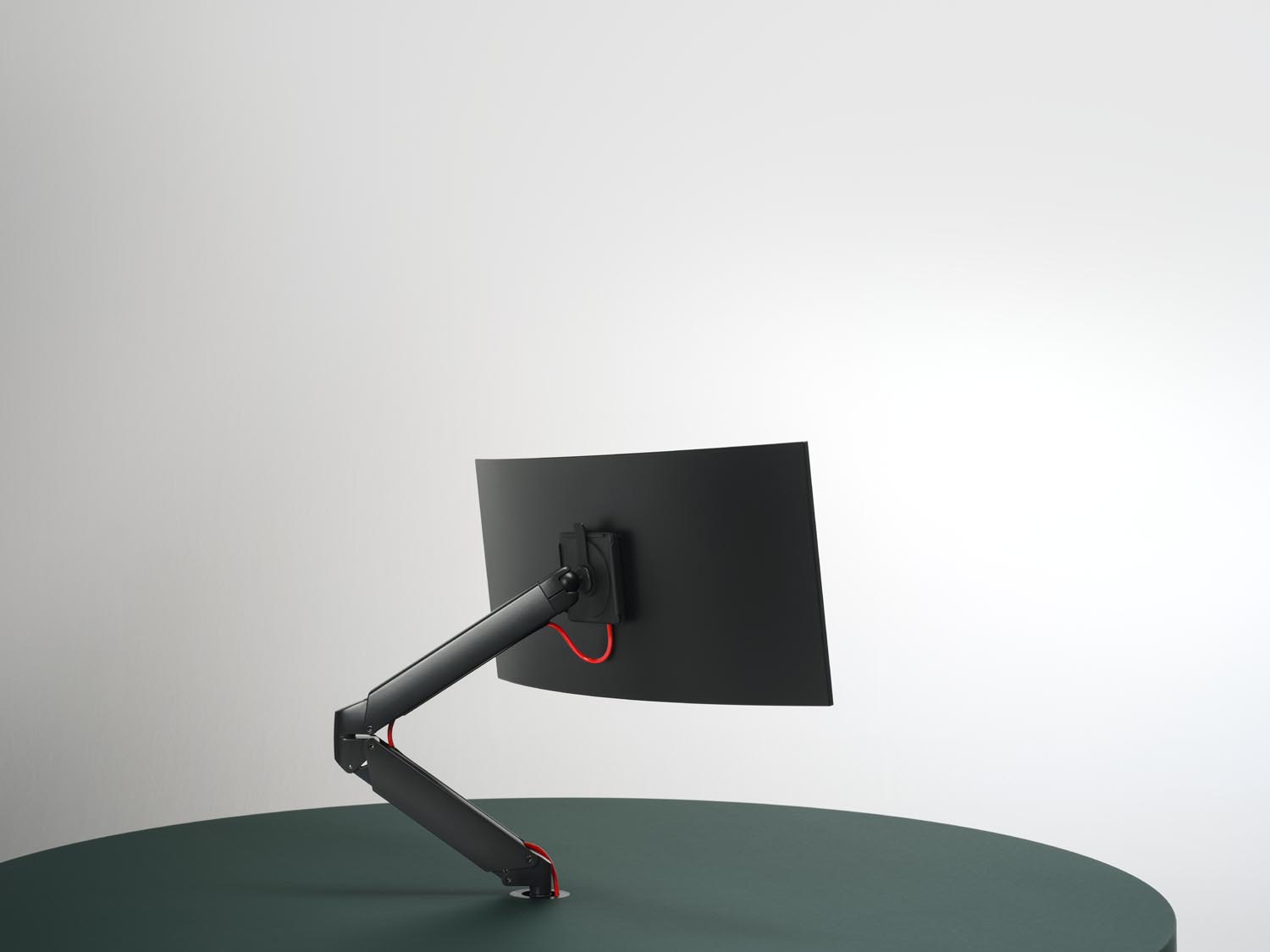
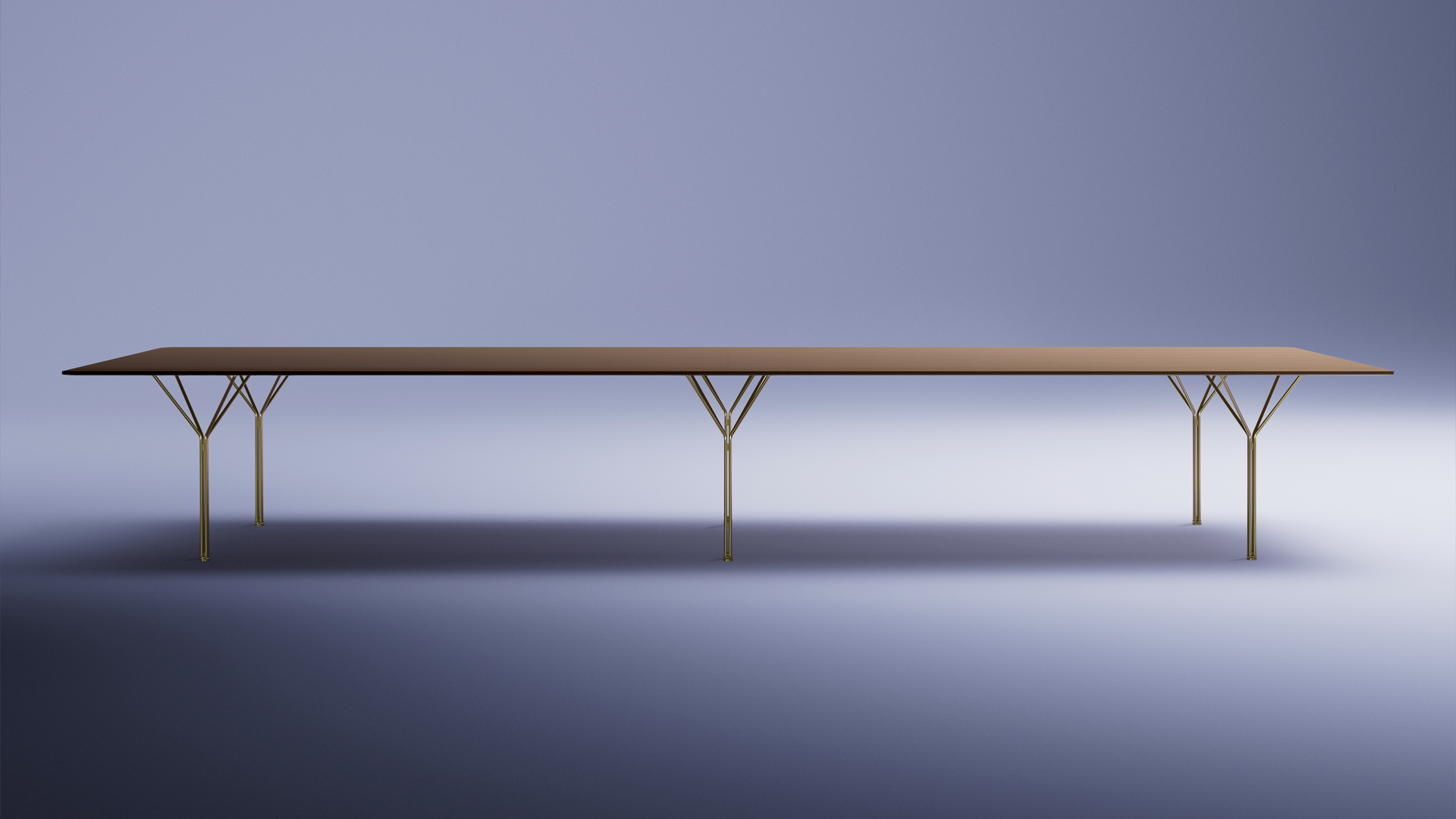
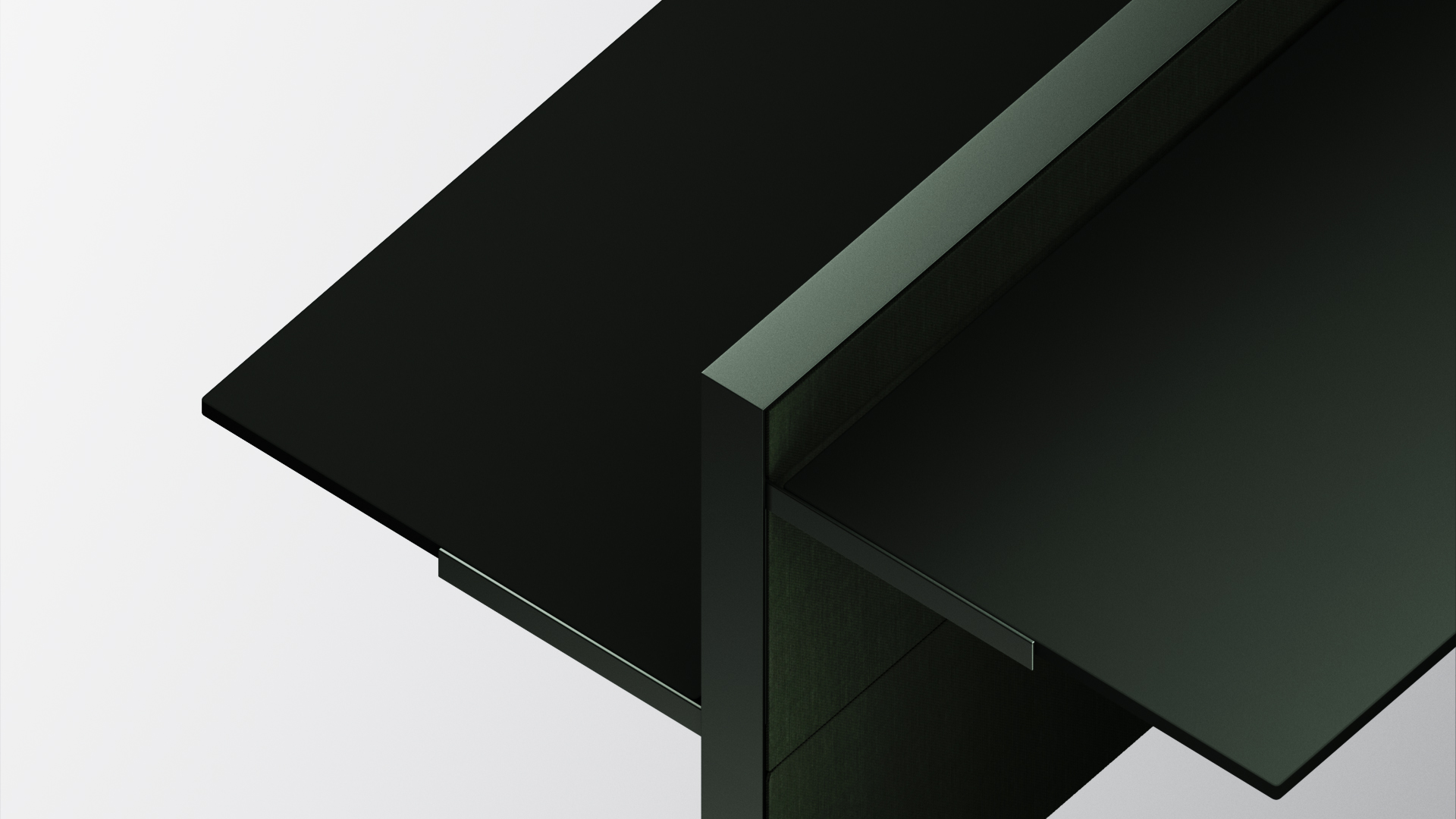
The relationship between UniFor and Jean Nouvel dates back to the late 1980s and was consolidated with the Fondation Cartier project completed in 1994. For that building, Jean Nouvel designed Less, a system of essential and archetypal tables later serially produced by UniFor. Reduced to their pure geometric forms, these furnishings translated the immaterial lightness of the architecture into the working environment, redefining the concept of the desk as a thin, lightweight table.
Over the decades, this collaboration has evolved across workplaces, cultural institutions, museum installations, and both bespoke and serial products, consistently exploring the intersection between architecture, design and industrial production.
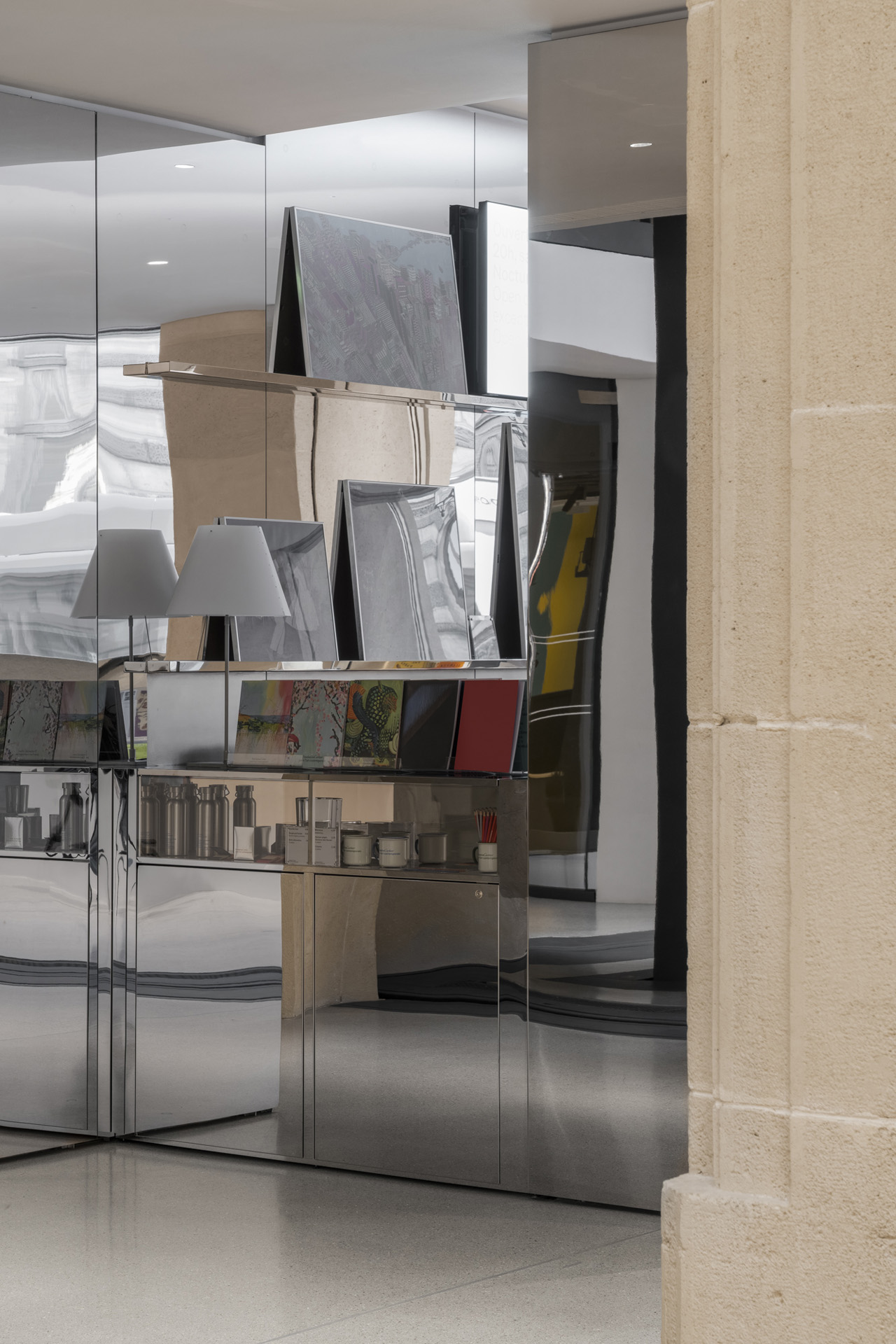
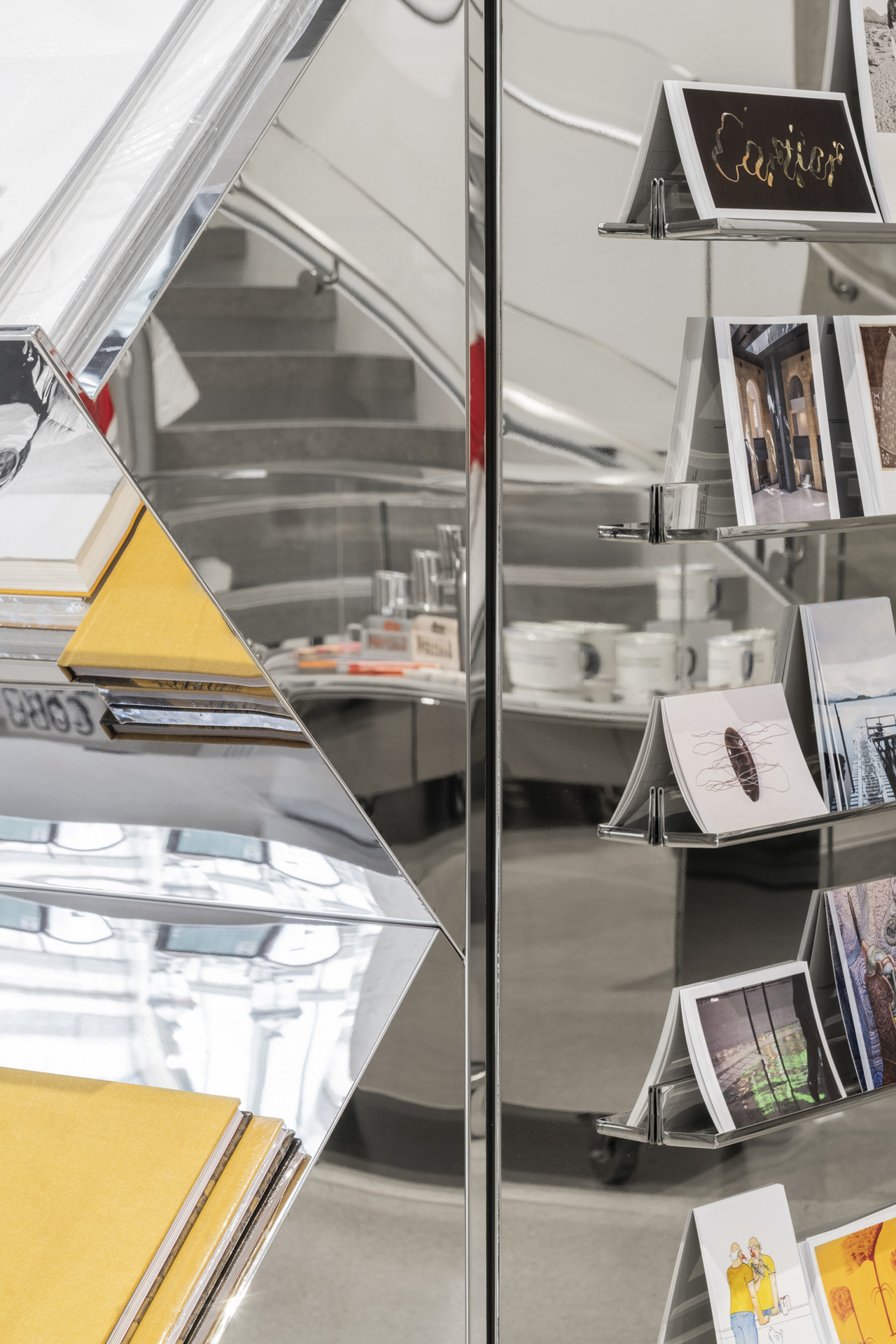
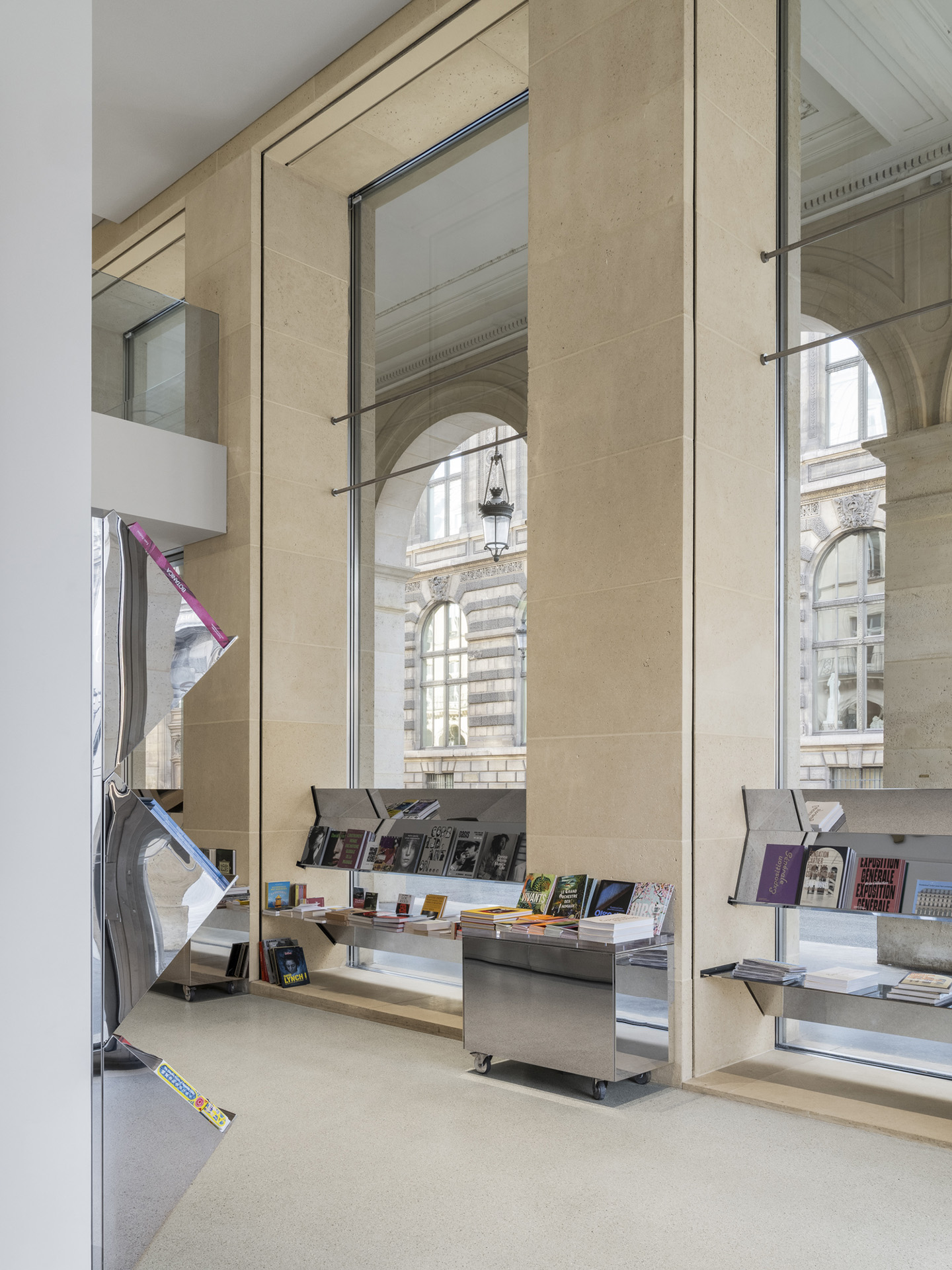
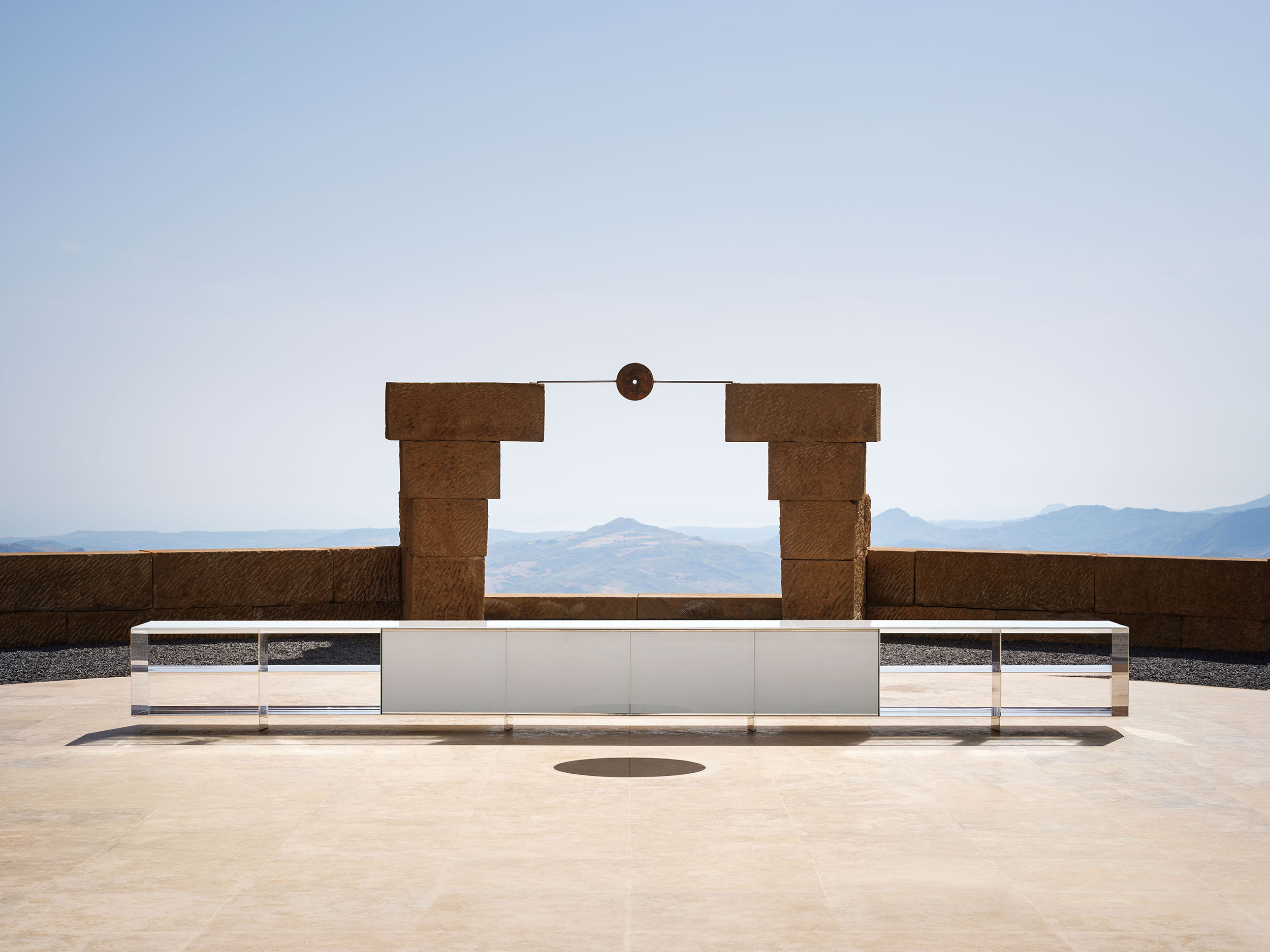
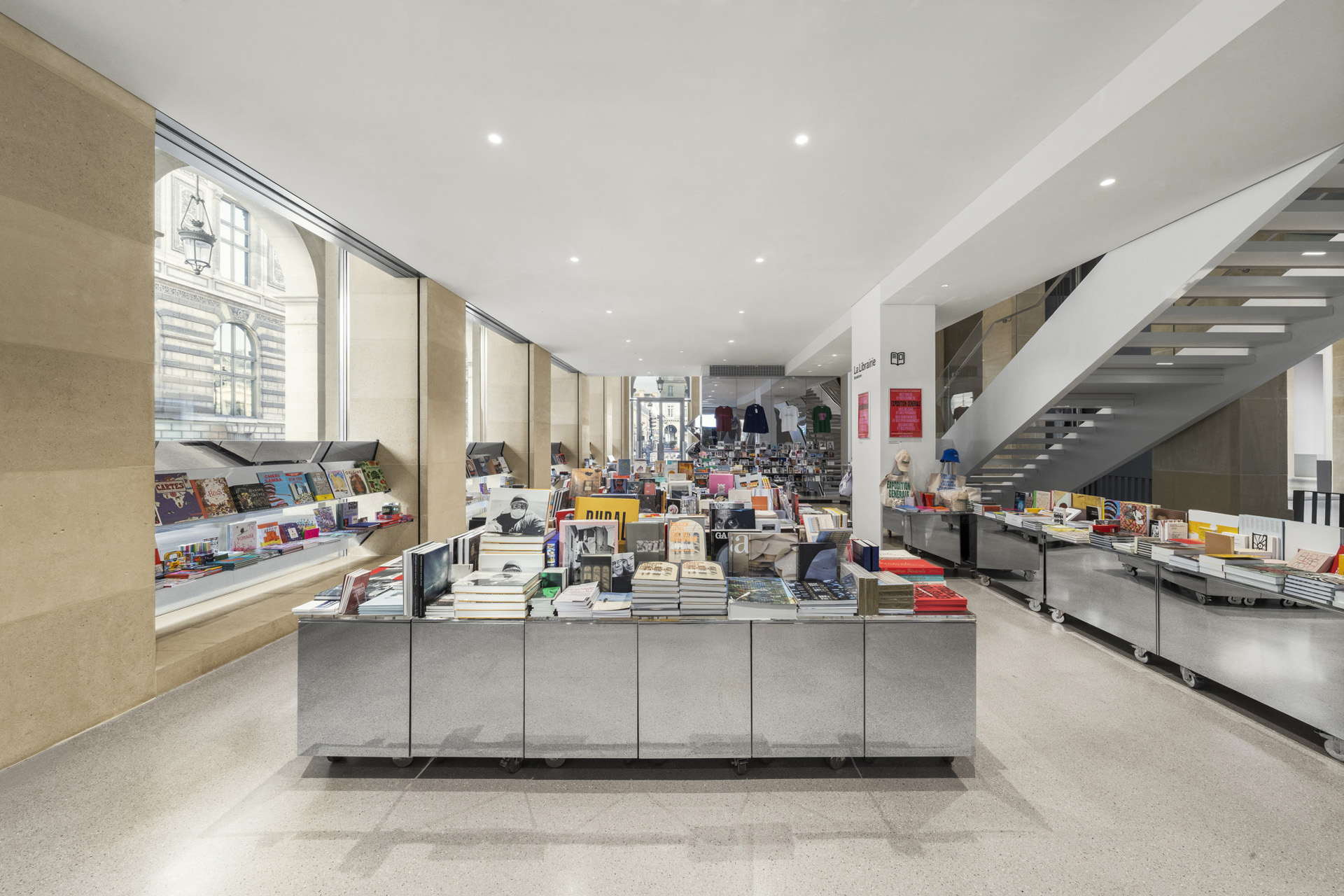
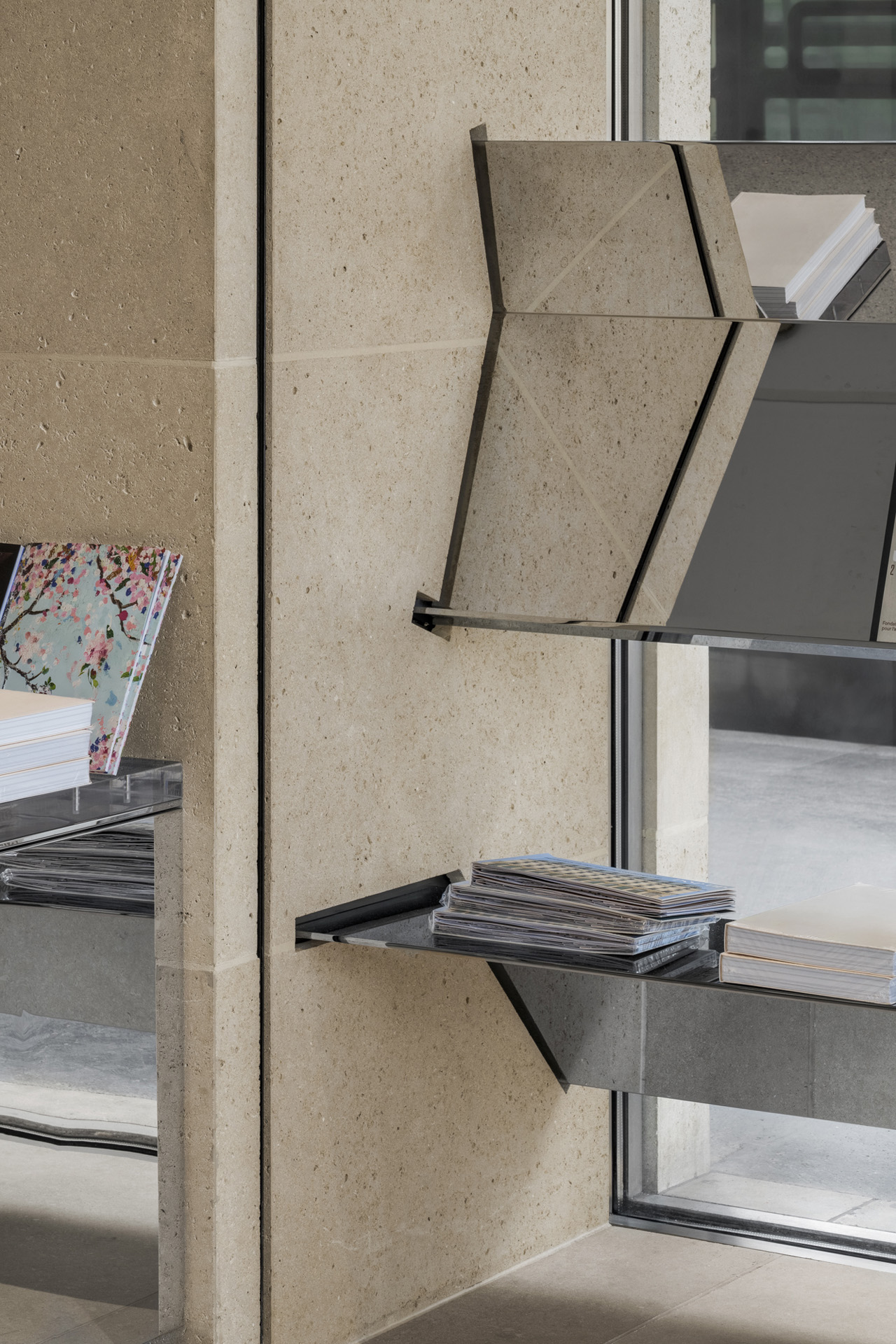
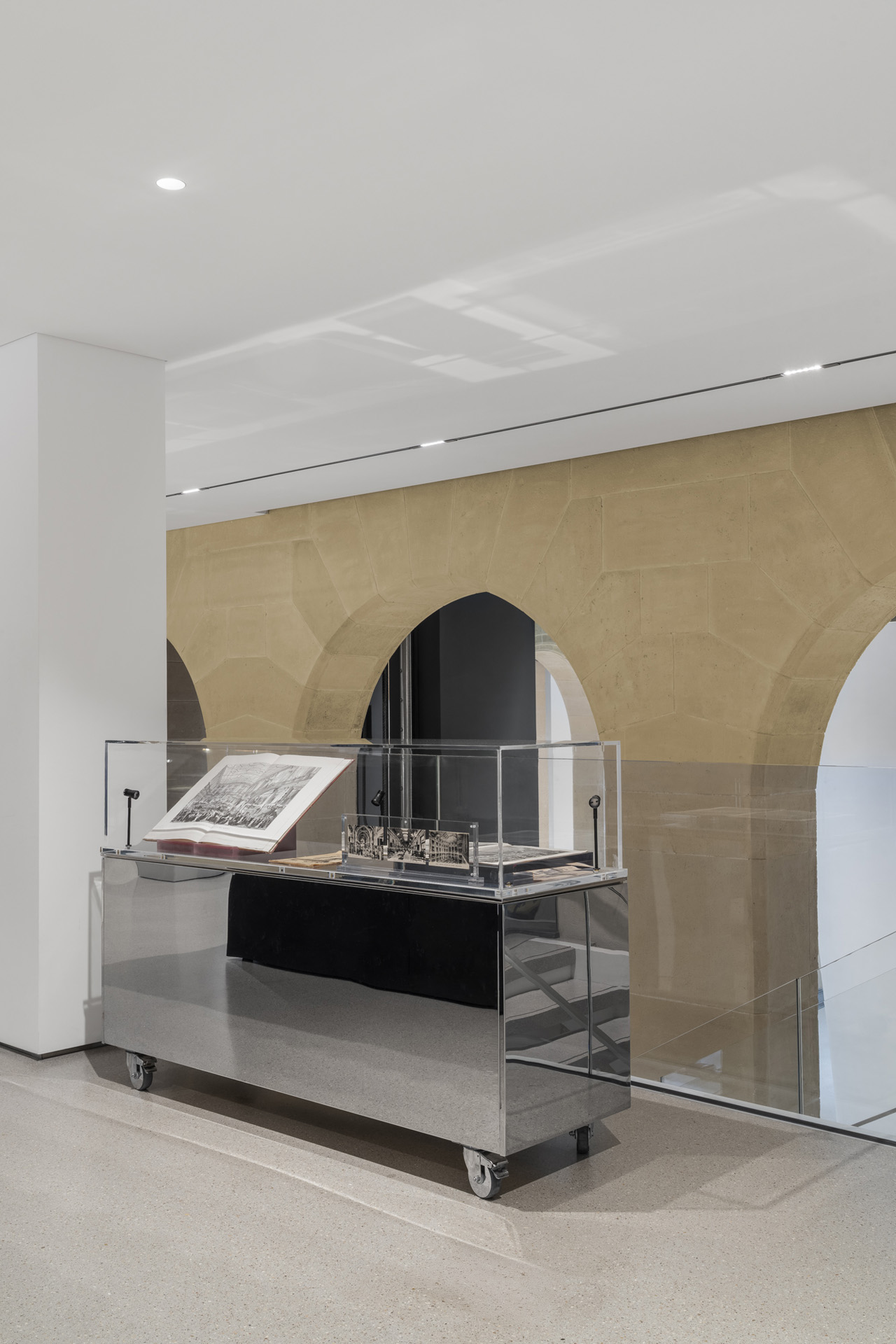
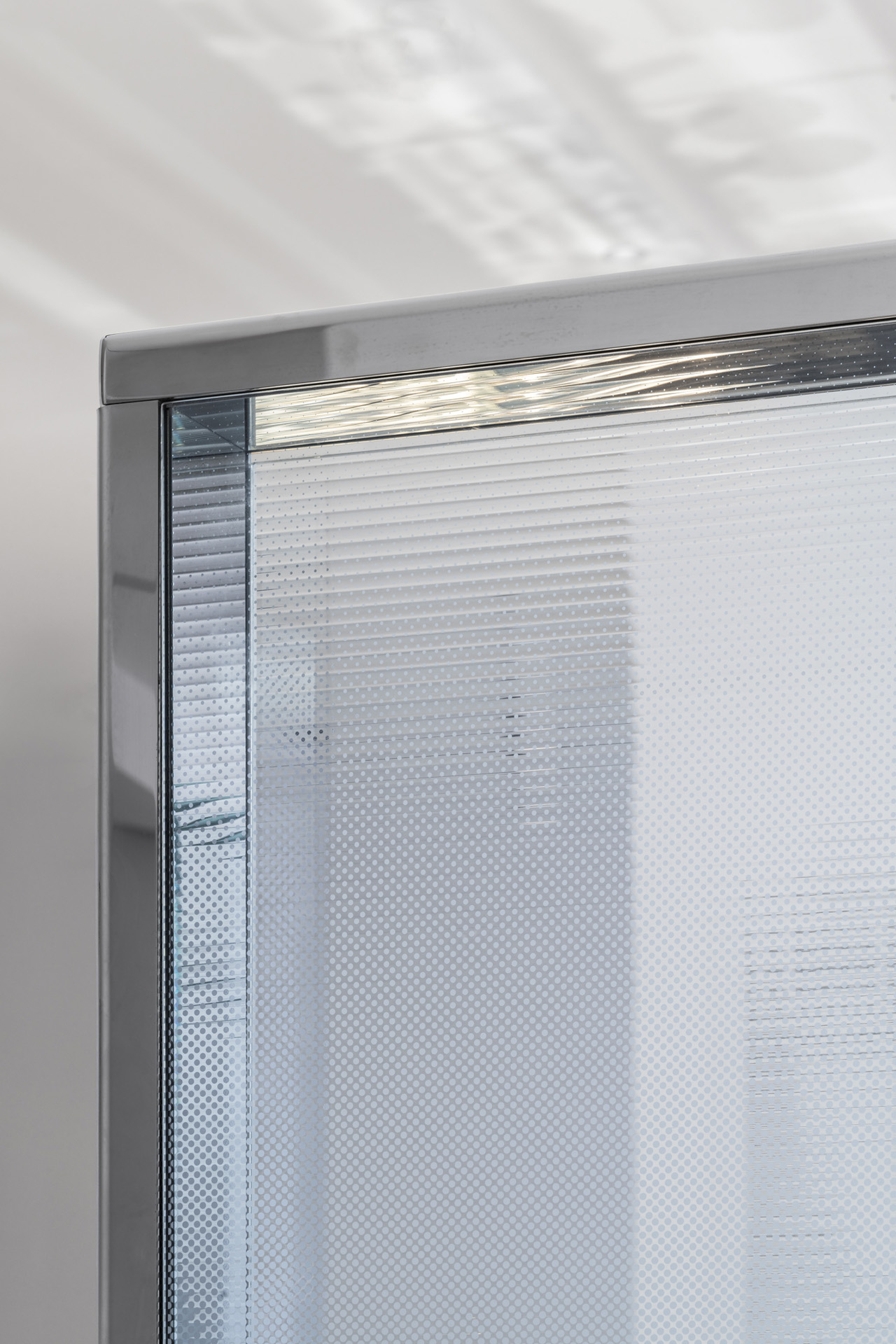
Within the new Fondation Cartier, UniFor contributed to the realisation of the bookstore and café areas. The project, entirely bespoke, is composed of mirrored panels and reflective steel structures that engage in dialogue with Jean Nouvel’s architectural language, revealing emptiness through depth and height.
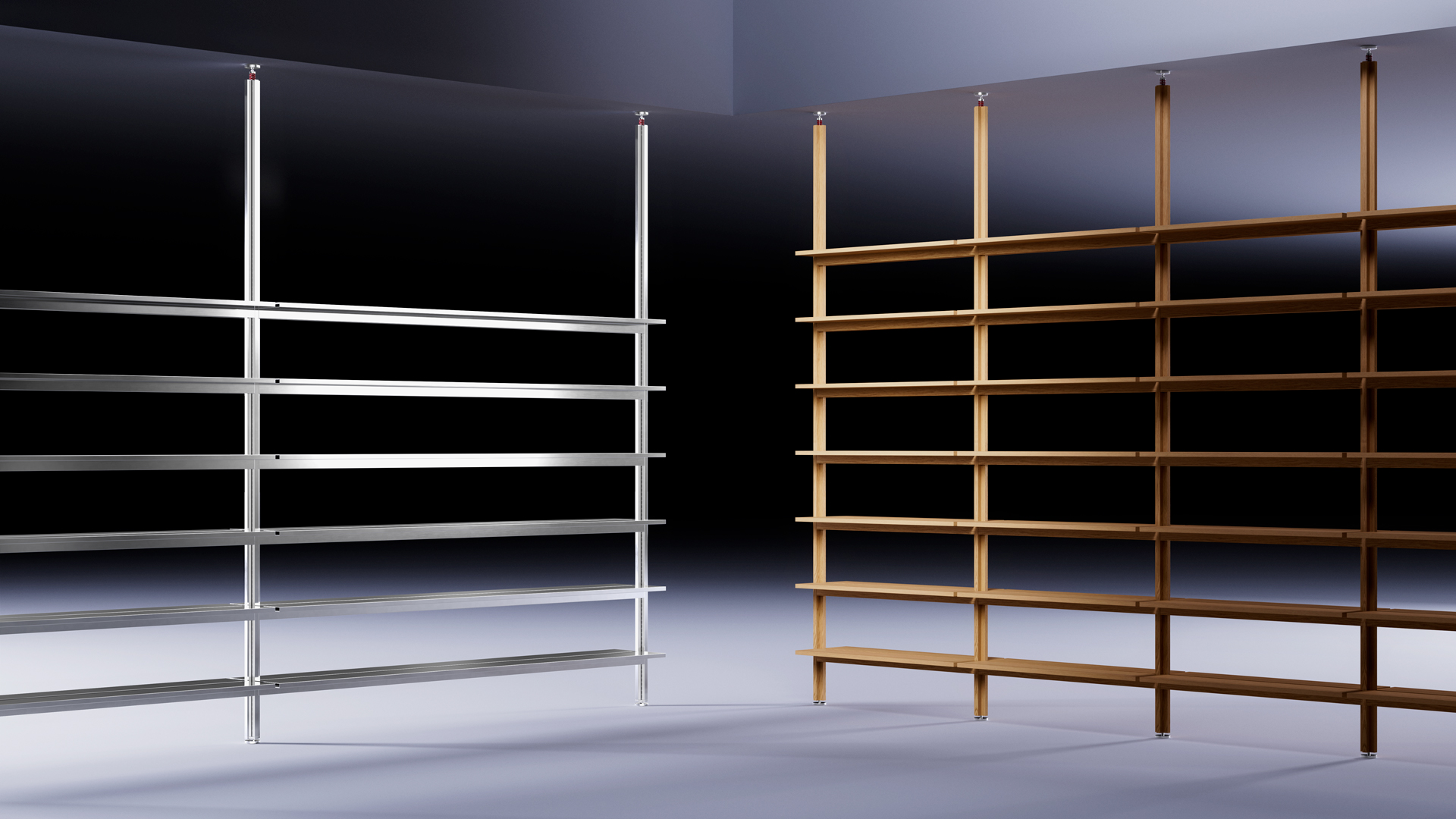
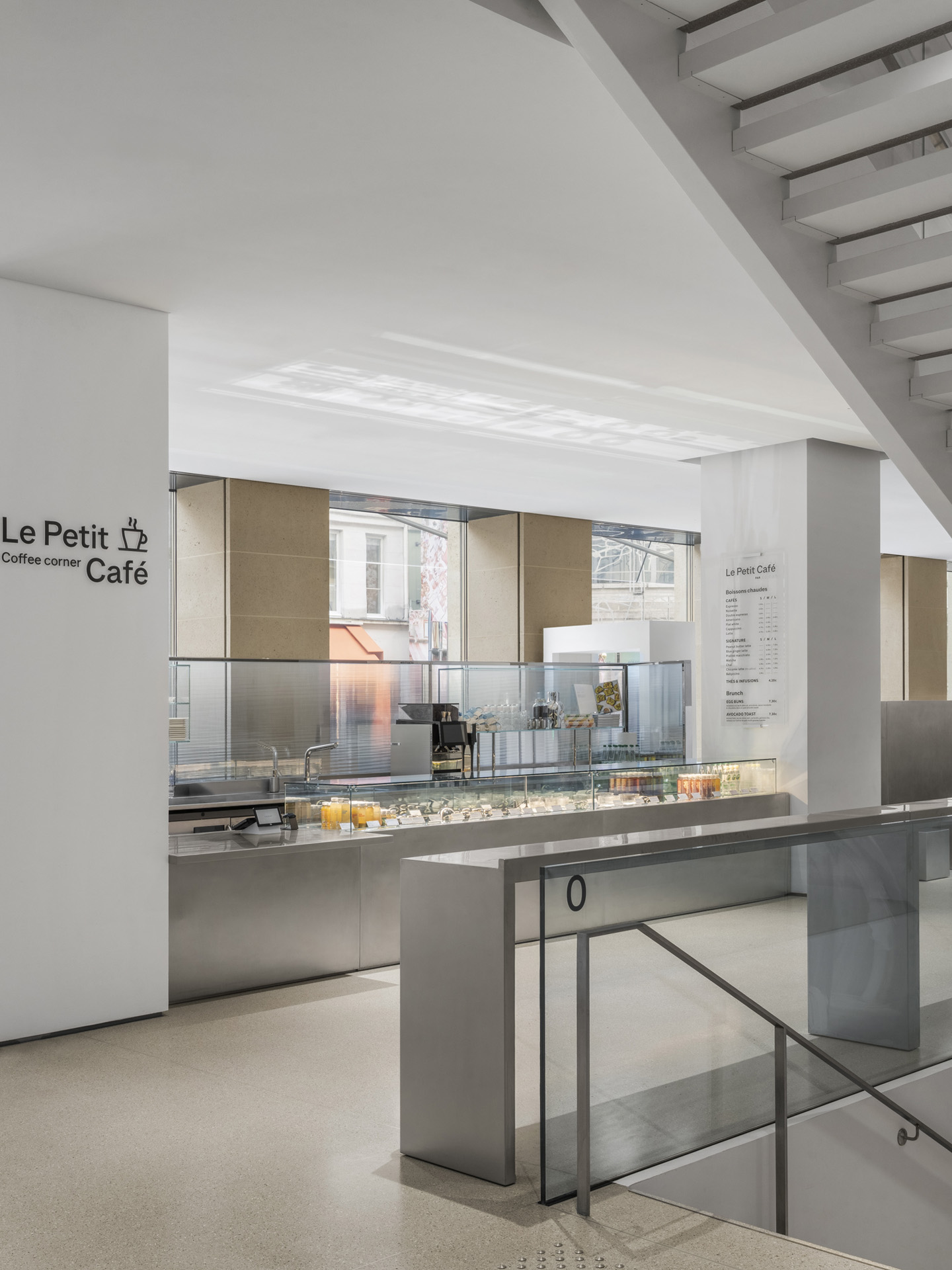
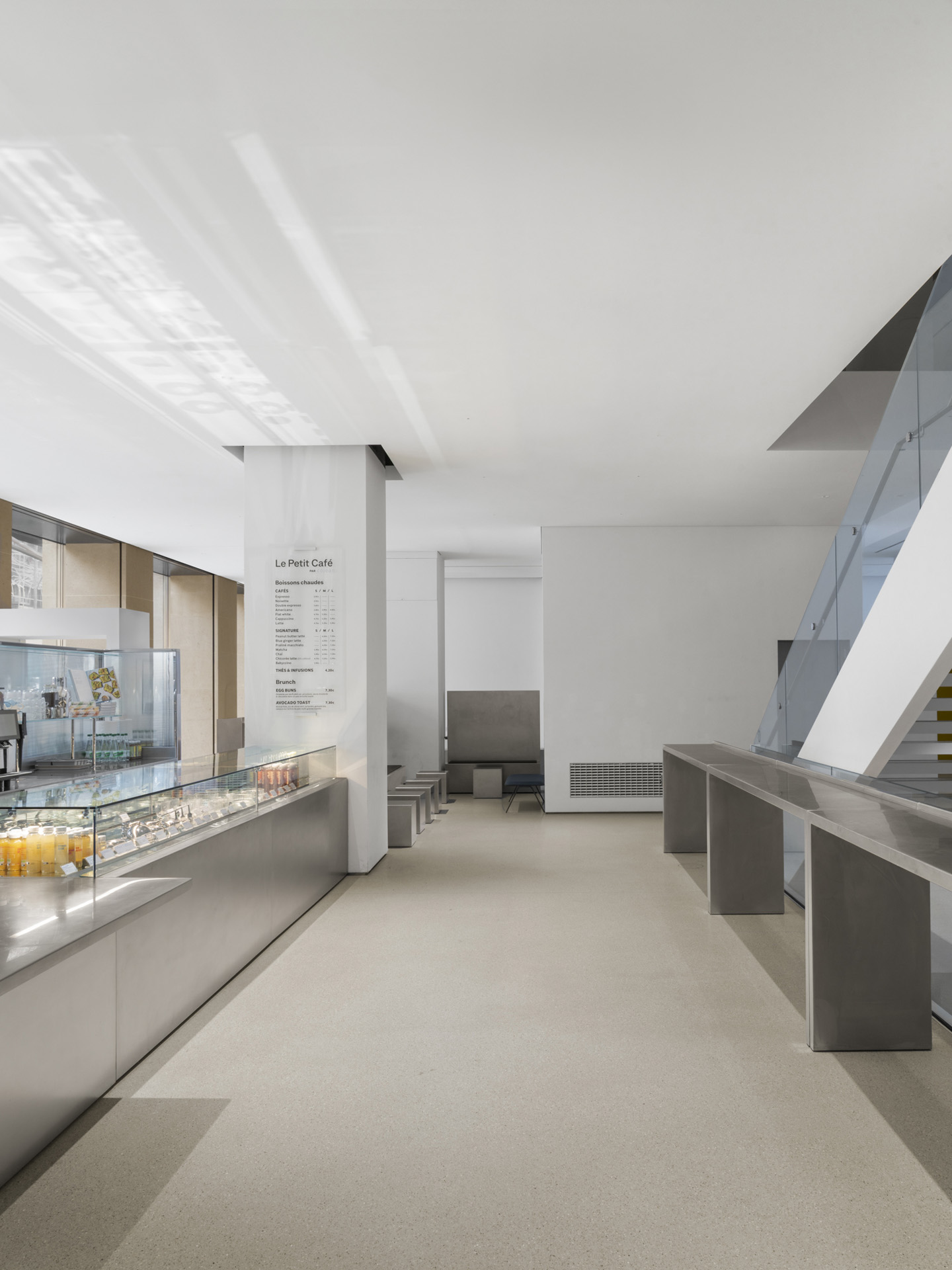
The furnishing intervention extends across the entire book exhibition area, from low steel units with plexiglass display structures for valuable volumes to shelving integrated within the shop windows. A large bookcase, engineered with refined technical expertise, transforms into a portal concealing technical rooms, while the checkout counter is composed of mirrored sheet-metal elements and removable wall-mounted shelves. The café area includes a steel counter combined with glass panels and, in continuity with the previous Fondation Cartier project, the interiors are completed by LessLess benches and tables in brushed steel.
Prior to completion, the new Fondation Cartier was presented during the 2025 Architecture Biennale at the Fondazione Giorgio Cini in Venice. On this occasion, UniFor supplied a series of LessLess tables designed by Jean Nouvel, contributing to an exhibition that traced the evolution from the 1994 building to the new spaces at Place du Palais-Royal, alongside other major museum projects by the architect.
For Jean Nouvel, every empty space represents an expressive opportunity to be explored; for UniFor, complex contexts become occasions to push the boundaries of design and production. A collaboration spanning more than three decades, in which architecture and furniture operate together to shape environments dedicated to culture and experimentation.